My Story
I've had a life that didn't go according to plan.
In the late 1980s I encountered HIV at a time when an HIV diagnosis could completely change the course of a person's life.
As my health deteriorated into an AIDS diagnosis, I spent time at the London Lighthouse hospice.
I survived.
What followed was a life of activism, writing, broadcasting, global health, relationships, illness, TB, addiction, recovery and reinvention.
I've campaigned against discrimination, written about the things that have happened to me, created radio, appeared in the media and occasionally caused controversy.
I'm now sober and still writing.
I'm also writing the story of how I got here.
Interview
In conversation — Spotify
Paul talks about his life, his diagnosis, and the years that followed — including his time at the London Lighthouse.
Seattle · June 2009
The Letter That Changed US Law

In June 2009, Paul was due to speak at the Pacific Health Summit in Seattle. He had spoken at conferences for fifteen years. This time, he decided not to lie.
Since 1987, US immigration law had required anyone applying for a visa or visa-waiver to declare if they were HIV positive — and if they were, they would be refused entry. The question sat on the form alongside those asking whether the applicant was a terrorist or a Nazi. Paul had always ticked "no." This time, he ticked "yes."
He was turned away. He could not attend his own speaking engagement. In his place, he sent a letter to be read aloud at the summit. It was precise, controlled, and deliberately designed to cause embarrassment.
"The US government gives people who have HIV one of two choices. The first is to be dishonest on the visa form — commit a felony, become a criminal. The second is to be honest, and be considered an undesirable person, unfit to enter the US. To my mind, either being a criminal or an undesirable isn't much of a choice. I don't want to be either."
— Paul Thorn's statement, read at the Pacific Health Summit, Seattle, June 2009
The letter was picked up by US Congressman Jim McDermott, who wrote directly to the Obama administration's health secretary citing Paul's case. Less than a fortnight later, the US government announced it would remove HIV as a "communicable disease of public health significance" — the legal mechanism that had underpinned the ban for twenty-two years. The change was in place by the end of 2009.

The US Senate had voted to overturn the rule in July 2008 as part of a $50 billion HIV/AIDS funding bill — but the change had never been implemented. Paul's case, and the letter that followed, was the catalyst that finally moved the Obama administration to act.
Michael Birt, executive director of the Pacific Health Summit, said Paul's absence had made "an even greater statement about the challenges we still face to address HIV policy."
Paul described the speed of the change as remarkable: "I am an advocate and I am used to advocacy being a very long process." He had written the statement in anger, he said, but tried to keep it unemotional. "It is quite barbed in places and it was clearly designed to cause embarrassment."
On the significance of the change: "It means I can go to Disneyland if I want to. It sounds flippant, but when you think about it, why shouldn't people with HIV be able to do that? It does mean that people with HIV can visit family and friends in the US, and people who might not have told their employer about it can go there for work without worrying. This is all about the US taking its rightful place as one of the leaders in dealing with the problem of HIV — welcome back."
Stonewall Awards
Journalist of the Year
In 2014, Paul was named a finalist for Stonewall's Journalist of the Year — recognition of more than two decades of writing about HIV, LGBTQ+ health, and the lives of people the mainstream press too often overlooked. The nomination acknowledged not just the volume of his output, but the honesty and advocacy that ran through all of it.
World AIDS Day 2018 · IFRC HQ, Geneva
Talking candidly about HIV
Paul delivered this talk at the International Federation of Red Cross headquarters in Geneva — speaking openly about over 30 years of living with HIV.

BBC Two · 1998
Living with the Enemy: Gays vs Homophobes
Before reality television had a name, the BBC made Living with the Enemy. The format was simple and radical: take two people with diametrically opposed views, move them into each other's lives, and film what happened. No scripts. No safety net.
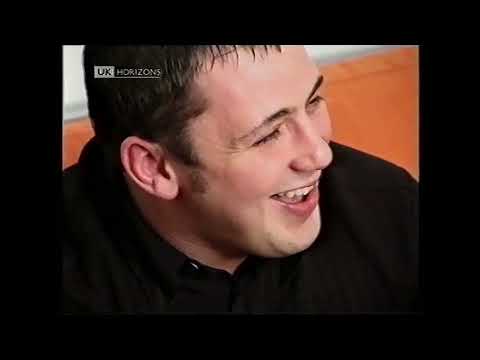
In the Gays vs Homophobes episode, two homophobic rugby fans from West Yorkshire came to stay with Paul and his partner in London. What followed was uncomfortable, honest, and — at moments — genuinely moving. The series is now widely cited as one of the forerunners of the reality TV genre, predating Big Brother and Wife Swap by years.
It was brave television. And it took brave participants to make it work.
"Today I'm sober, still writing, still talking — and considerably more interested in the possibilities of life than I was when I thought I was going to lose it."